
Korean Fermented Cabbage Kimchi
Introduction
Korean Fermented Cabbage Kimchi is a traditional dish that holds a special place in Korean culture and cuisine. Dating back centuries, kimchi has been a staple in Korean households, not just for its unique flavor but also for its health benefits. The process of fermenting cabbage with a blend of spices creates a dish that is not only delicious but also packed with probiotics and nutrients.
Every family in Korea has its own recipe for kimchi, passed down through generations, making it a deeply cherished part of Korean heritage. The art of making kimchi requires time, patience, and attention to detail, but the end result is a flavorful and versatile dish that can be enjoyed in various ways.
In this article, we will explore the intricacies of making Korean Fermented Cabbage Kimchi, from the selection of ingredients to the fermentation process. Whether you are a kimchi enthusiast or new to this culinary delight, this guide will help you create a batch of authentic kimchi right in your own kitchen.
Embark on this flavorful journey with us as we dive into the world of Korean Fermented Cabbage Kimchi and unravel the secrets behind this beloved dish.
Why You’ll Love Korean Fermented Cabbage Kimchi
One of the reasons you’ll love Korean Fermented Cabbage Kimchi is its versatility. This dish can be enjoyed on its own as a side dish, added to soups, stews, or stir-fries, or even used in fusion recipes to add a unique twist. The bold flavors of kimchi can elevate any dish, bringing a delightful tanginess and umami richness.
Moreover, kimchi is known for its health benefits. Being a fermented food, kimchi is rich in probiotics that promote gut health and digestion. Additionally, the combination of cabbage and spices in kimchi provides a good source of vitamins and antioxidants, making it a nutritious addition to your diet.
Whether you are looking for a flavorful accompaniment to your meals or aiming to incorporate more fermented foods into your diet, Korean Fermented Cabbage Kimchi is a winning choice that ticks both the taste and health boxes.
Get ready to discover the joys of making your own kimchi and experience the satisfaction of creating a dish that is as good for your taste buds as it is for your well-being.
Ingredients
To make Korean Fermented Cabbage Kimchi, you will need the following ingredients:
– Napa cabbage
– Korean radish
– Green onions
– Garlic
– Ginger
– Korean red chili pepper flakes (Gochugaru)
– Fish sauce
– Salt
These ingredients come together to create the signature flavors of kimchi, with the perfect balance of spice, sweetness, and tanginess. While the list may seem simple, the magic of kimchi lies in the precise measurements and quality of each component.
Feel free to adjust the spice level or make ingredient substitutions based on your preferences. You can also explore adding other vegetables or seasonings to customize your kimchi recipe to suit your taste.
Step-by-Step Instructions
1. Preparing the Cabbage
Start by cutting the Napa cabbage in half lengthwise and then into quarters. Remove the core and chop the cabbage into bite-sized pieces. Place the cabbage in a large bowl, sprinkle salt between the leaves, and let it sit for a few hours to soften.
After the cabbage has softened, rinse it thoroughly to remove excess salt, then drain and squeeze out any excess water. Set the cabbage aside as you prepare the seasoning.
2. Making the Seasoning Paste
In a blender, combine garlic, ginger, Korean red chili pepper flakes, fish sauce, and a bit of water to create a smooth paste. Adjust the seasonings to achieve the desired level of spiciness and flavor.
Transfer the seasoning paste to a mixing bowl and add chopped Korean radish and green onions. Mix well to combine all the ingredients evenly.
3. Fermenting the Kimchi
Coat each piece of cabbage thoroughly with the seasoning paste, ensuring that every leaf is well coated. Pack the kimchi tightly into a clean jar, pressing down to remove any air pockets.
Seal the jar and let it ferment at room temperature for a day or two, then transfer it to the refrigerator to continue fermenting for a few more days. The kimchi will develop its signature tangy flavor as it ferments.
Expert Tips for Success
For the best results when making Korean Fermented Cabbage Kimchi:
– Use fresh, high-quality ingredients for authentic flavors.
– Adjust the amount of Korean red chili pepper flakes to control the spiciness of the kimchi.
– Make sure the kimchi is properly fermented by tasting it along the way and adjusting the fermentation time based on your preference.
– Store the kimchi in airtight containers in the refrigerator to slow down the fermentation process and preserve its flavors.
Variations and Substitutions
If you want to experiment with different flavors or dietary preferences, consider these variations and substitutions for Korean Fermented Cabbage Kimchi:
– Vegan Kimchi: Replace fish sauce with soy sauce or miso for a vegan-friendly version.
– Fruity Kimchi: Add fruits like apples or pears to the seasoning paste for a slightly sweet and refreshing twist.
– Spicy Kimchi: Increase the amount of Korean red chili pepper flakes for an extra kick of heat.
– White Kimchi: Omit the red chili pepper flakes for a milder, non-spicy version of kimchi.
Serving Suggestions
Korean Fermented Cabbage Kimchi is a versatile dish that can be served in various ways:
– Enjoy it as a side dish with rice and other Korean dishes.
– Add it to soups, stews, or fried rice for a flavor boost.
– Incorporate it into wraps, sandwiches, or tacos for a unique twist.
– Use it as a topping for burgers, hot dogs, or grilled meats for a Korean-inspired fusion experience.
FAQs
How long does kimchi last?
Properly stored in the refrigerator, kimchi can last for several weeks to months, with its flavor developing and maturing over time.
Can I adjust the level of spiciness in kimchi?
Yes, you can control the spiciness of kimchi by adjusting the amount of Korean red chili pepper flakes used in the seasoning paste.
Is kimchi suitable for vegetarians?
While traditional kimchi contains fish sauce, you can make vegetarian-friendly kimchi by substituting fish sauce with soy sauce or miso.
Why does kimchi sometimes bubble during fermentation?
Bubbling in kimchi during fermentation is a natural process caused by the release of gases as the beneficial bacteria work to ferment the ingredients.
Final Thoughts
Korean Fermented Cabbage Kimchi is more than just a dish – it’s a representation of Korean culinary tradition, flavor, and health. By mastering the art of making kimchi at home, you not only indulge in a delicious and nutritious treat but also connect with a rich cultural heritage that spans generations.
So, gather your ingredients, follow the steps with care, and let the magic of fermentation transform simple cabbage into a complex and flavorful delight. Embrace the tang, savor the spice, and relish in the joy of creating your own batch of Korean Fermented Cabbage Kimchi.
Experience the taste of Korea in every bite, and share the love for kimchi with your friends and family. Happy fermenting!
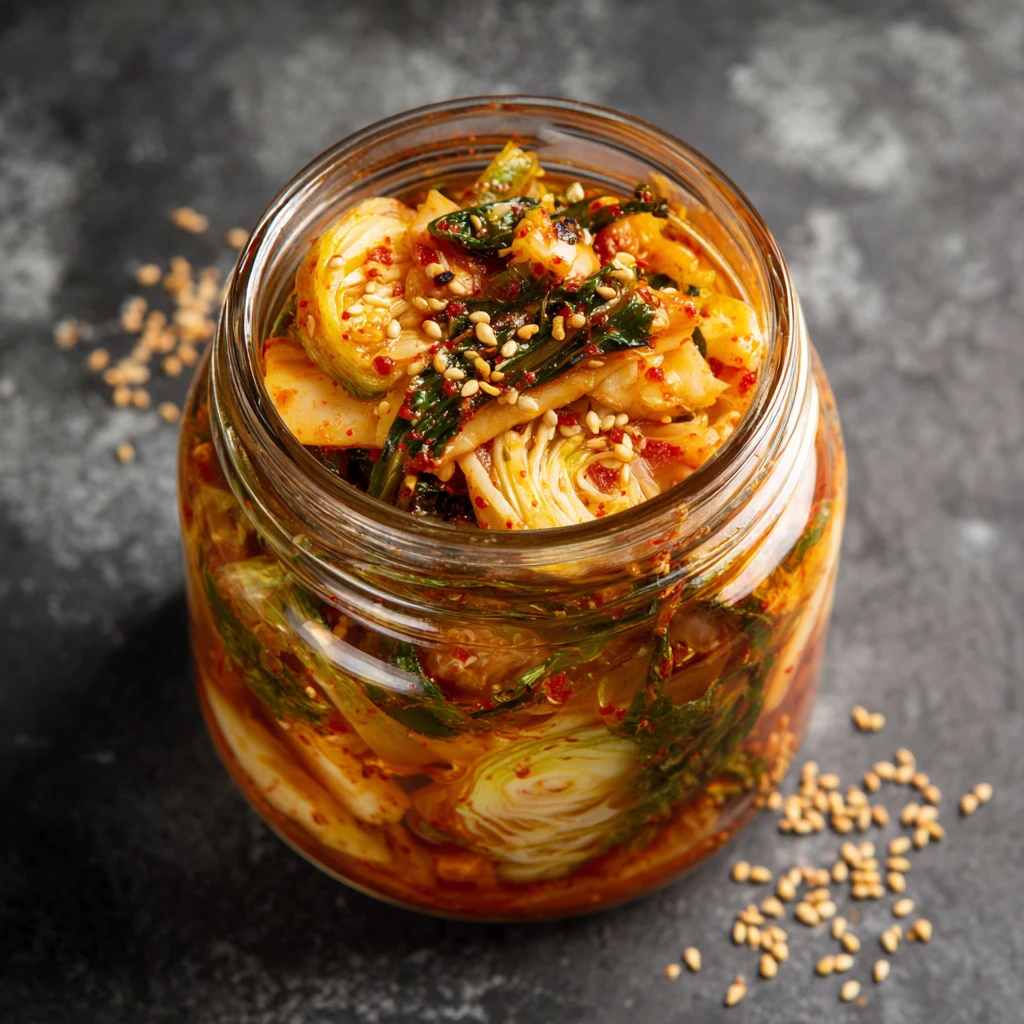
Korean Fermented Cabbage Kimchi
Learn how to make traditional Korean Fermented Cabbage Kimchi, a flavorful and versatile dish rich in probiotics and nutrients. This step-by-step guide will help you create authentic kimchi at home.
Ingredients
- 1 head Napa cabbage
- 1 Korean radish
- 4 green onions
- 5 cloves garlic
- 1 small piece ginger
- 1/2 cup Korean red chili pepper flakes (Gochugaru)
- 1/4 cup fish sauce
- 3 tablespoons salt
Directions
-
Cut the Napa cabbage into quarters, remove the core, chop into bite-sized pieces, and salt between leaves. Let it soften and rinse thoroughly.
-
Blend garlic, ginger, Korean red chili pepper flakes, fish sauce, and water to make a paste. Adjust seasonings.
-
Mix the paste with chopped Korean radish and green onions.
-
Coat cabbage with the seasoning paste, pack tightly into a jar, and ferment at room temperature for 1-2 days, then refrigerate for a few more days.